
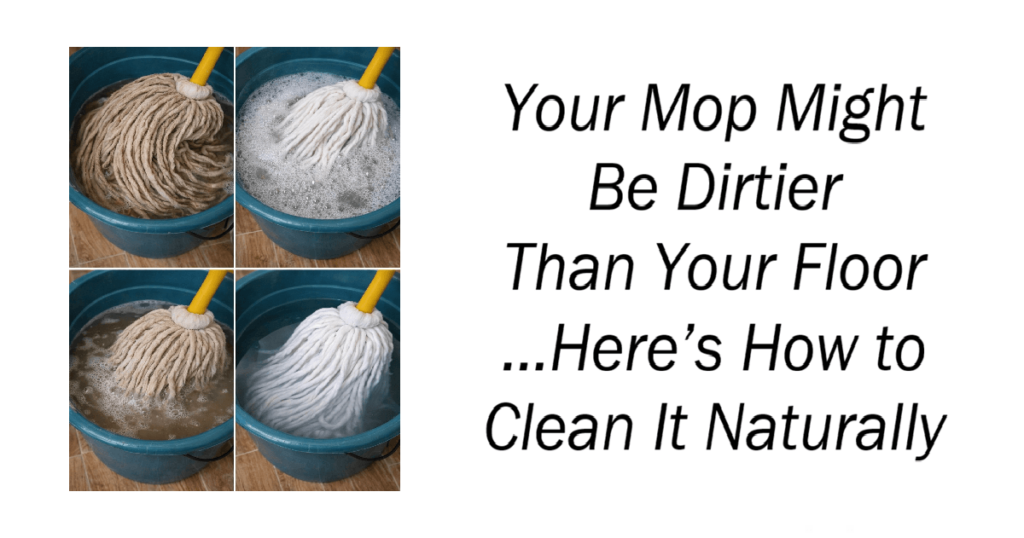
Your Mop Might Be Dirtier Than Your Floor …Here’s How to Clean It Naturally
Most of us use a mop almost every day to keep our floors spotless, fresh, and germ-free. We pour in scented cleaners, disinfectants, and chemical products expecting perfectly clean results.
But here’s the surprising truth:
If your mop itself is dirty, you may actually be spreading bacteria and bad odors around your home instead of removing them.
A mop absorbs dust, grease, germs, and moisture every time it’s used. Without proper cleaning, it quickly becomes a breeding ground for bacteria — and no
amount of floor cleaner can fix that.
The good news? You don’t need expensive products or harsh chemicals to restore your mop. Simple natural ingredients you probably already have at home can clean, disinfect, and refresh it effectively.
When Should You Wash or Replace a Mop?
Many people throw away their mop as soon as it starts looking dirty or smelling unpleasant. But in most cases, that’s completely unnecessary.
A mop should only be replaced when:
- The fibers are badly worn out
- It no longer absorbs water properly
- It cannot be cleaned thoroughly anymore
Otherwise, a good deep cleaning is usually enough to make it fresh and reusable again.
Baking Soda: The Simple Trick for Deep Cleaning a Mop
One of the best natural solutions for cleaning a dirty mop is baking soda.
Known for its powerful cleaning and deodorizing properties, baking soda helps:
- Remove dirt and grime
- Neutralize odors
- Eliminate bacteria
- Refresh mop fibers naturally
How to Use It
What You Need:
- ½ cup baking soda
- A bucket of warm water
Instructions:
- Fill a bucket with warm water.
- Add the baking soda.
- Soak the mop or cleaning cloths for 1–2 hours.
- Rinse thoroughly until the water runs clear.
- Let the mop dry completely before storing it.
For extra sanitation, you can also wash certain mop heads in the washing machine using baking soda instead of harsh detergents.
Vinegar: The Natural Odor Remover
Vinegar is another powerful natural cleaner that works wonders on dirty mops.
It helps:
- Remove unpleasant smells
- Break down grease
- Kill bacteria naturally
- Freshen mop fibers
How to Use Vinegar for Mop Cleaning
Ingredients:
- Warm water
- 1 cup vinegar per liter of water
Instructions:
- Fill a container with warm water.
- Add vinegar.
- Soak the mop for about 30 minutes.
- Rinse thoroughly and allow it to dry.
For even stronger cleaning power, add 2 tablespoons of baking soda to the mixture.
Lemon: Freshness and Natural Disinfection
Lemon doesn’t just smell clean — it also has natural antibacterial properties.
It’s excellent for:
- Removing odors
- Freshening mop fibers
- Fighting bacteria naturally
Lemon Cleaning Method
What You Need:
- Juice of 2 lemons
- Warm water
Instructions:
- Add lemon juice to a container of warm water.
- Soak the mop for about an hour.
- Rinse well and let dry completely.
Your mop will smell noticeably fresher afterward.
Tea Tree Oil: A Powerful Antibacterial Solution
Tea tree oil is widely known for its natural antibacterial and antifungal properties.
Adding a few drops during cleaning can help:
- Eliminate bacteria
- Prevent moldy smells
- Deep clean the mop naturally
Easy Tea Tree Oil Soak
Ingredients:
- Warm water
- Juice of 2 lemons
- A few drops of tea tree oil
Instructions:
- Mix all ingredients in a bucket or container.
- Soak the mop for 30 minutes.
- Rinse thoroughly and dry.
This combination leaves the mop deeply cleaned and pleasantly fresh.
What About Ammonia?
For extremely dirty mops, some people use water mixed with a small amount of ammonia for deep cleaning.
While effective, ammonia should be handled carefully:
- Always rinse the mop thoroughly afterward
- Never mix ammonia with bleach
- Allow the mop to dry completely before storage
A damp mop stored away can quickly develop strong odors and bacteria buildup again.
The Most Important Step: Let It Dry Completely
No matter which cleaning method you choose, proper drying is essential.
A wet mop stored in a dark space can develop:
- Mold
- Mildew
- Strong unpleasant odors
- Bacteria growth
After washing:
- Wring out excess water
- Hang the mop in a ventilated area
- Allow it to dry fully before putting it away
Final Thoughts
Keeping your mop clean is just as important as cleaning your floors.
Natural ingredients like:
- Baking soda
- Vinegar
- Lemon
- Tea tree oil
can effectively disinfect, deodorize, and refresh your mop without relying on expensive chemical cleaners.
The best part? These remedies are affordable, eco-friendly, and surprisingly effective.
Sometimes the secret to cleaner floors isn’t buying stronger cleaning products — it’s simply starting with a cleaner mop.
You’ve just read Your Mop Might Be Dirtier Than Your Floor. Why not read Which Glass Contains the Most Water