
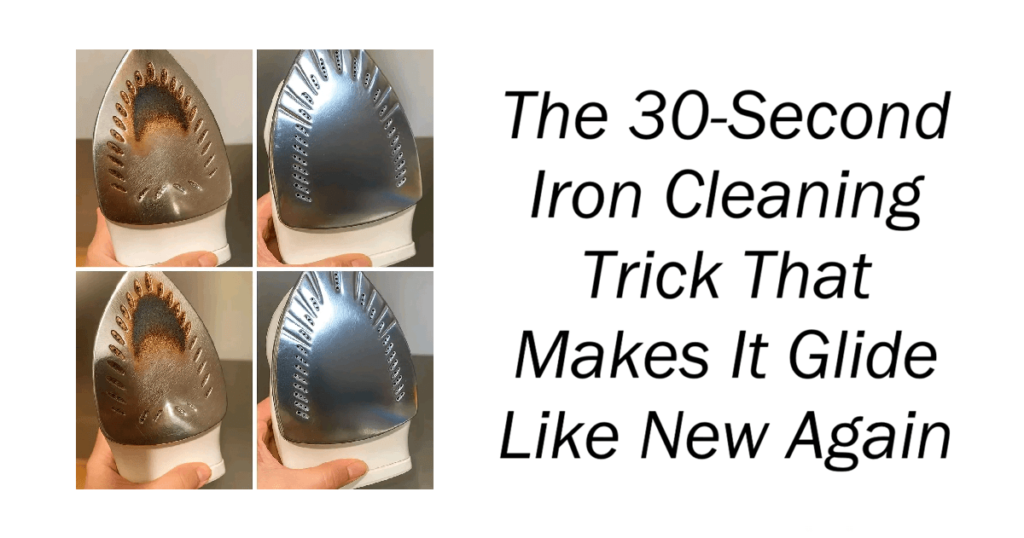
The 30-Second Iron Cleaning Trick That Makes It Glide Like New Again
If your iron suddenly starts:
- Dragging across clothes
- Leaving marks
- Sticking to fabric
- Releasing brown residue
there’s a good chance the soleplate simply needs cleaning.
Over time, irons collect buildup from:
- Fabric fibers
- Starch sprays
- Mineral deposits
- Burnt residue
- Hard water
The good news is that you usually don’t need expensive cleaning products to fix it.
A few simple household ingredients can often restore smooth performance in minutes.
The Quick Baking Soda Method
One of the most popular DIY cleaning methods uses:
- Baking soda
- Water
Because baking soda is mildly abrasive, it helps lift residue without heavily scratching most metal surfaces.
What You Need
- 1 spoonful of baking soda
- A few drops of water
- Soft cloth
- Cotton swab (optional)
How to Clean the Iron
Step 1: Make a Paste
Mix the baking soda with a small amount of water until it forms a thick paste.
Step 2: Apply Gently
Spread the paste across the cool iron’s soleplate (the metal bottom surface).
Avoid getting too much moisture inside steam holes.
Step 3: Wipe Clean
Use a damp cloth to remove the paste and loosened residue.
Step 4: Clean Steam Holes
Use a cotton swab dipped in water to gently clean around the steam vents if needed.
Once dry, the iron should glide more smoothly again.
Other Quick Cleaning Tricks
Different types of buildup may respond better to different methods.
Salt and Paper Method
This trick is commonly used for burnt residue.
How It Works:
- Sprinkle salt onto paper or a towel
- Heat the iron slightly
- Glide it gently over the salt
The salt helps loosen stuck-on debris from the soleplate surface.
Vinegar Wipe for Tough Stains
White vinegar is often used to dissolve mineral deposits and grime.
Method:
- Warm a small amount of vinegar
- Dampen a cloth
- Wipe the soleplate carefully
Vinegar may help break down stubborn residue left from hard water or fabric sprays.
Why Irons Get Dirty So Quickly
Many people don’t realize how much buildup accumulates during normal ironing.
Common causes include:
- Melted synthetic fabrics
- Spray starch residue
- Minerals from tap water
- Dust and fibers
As buildup increases, the iron:
- Stops gliding smoothly
- Heats unevenly
- May stain clothes
Regular light cleaning helps prevent larger problems later.
Important Safety Tips
Before cleaning your iron:
- Unplug it completely
- Let it cool fully unless instructions specifically require warmth
- Avoid soaking the appliance
- Never use harsh metal scrubbers
Some modern irons also have special nonstick coatings that can scratch easily, so always clean gently.
How to Keep Your Iron Cleaner Longer
A few simple habits help reduce future buildup.
Helpful Tips:
- Use distilled water if recommended
- Empty the water tank after use
- Avoid overheating delicate fabrics
- Wipe the soleplate occasionally before residue hardens
Regular maintenance often extends the life of the iron and improves ironing performance.
Final Thoughts
A dirty iron can make even simple laundry frustrating.
Fortunately, restoring it often takes only a few household ingredients and a couple of minutes.
Baking soda, salt, and vinegar remain popular because they’re:
- Affordable
- Easy to use
- Effective for light buildup
And sometimes the simplest cleaning tricks really are the most useful ones.
This article is for informational and household-use purposes only. Always follow your iron manufacturer’s cleaning recommendations to avoid damage.
You’ve just read Iron Cleaning Trick. Why not read Two Men Go Out For A Night On The Town