
The Chair You Choose Might Reveal More About You Than You Think
Imagine walking into a quiet room.
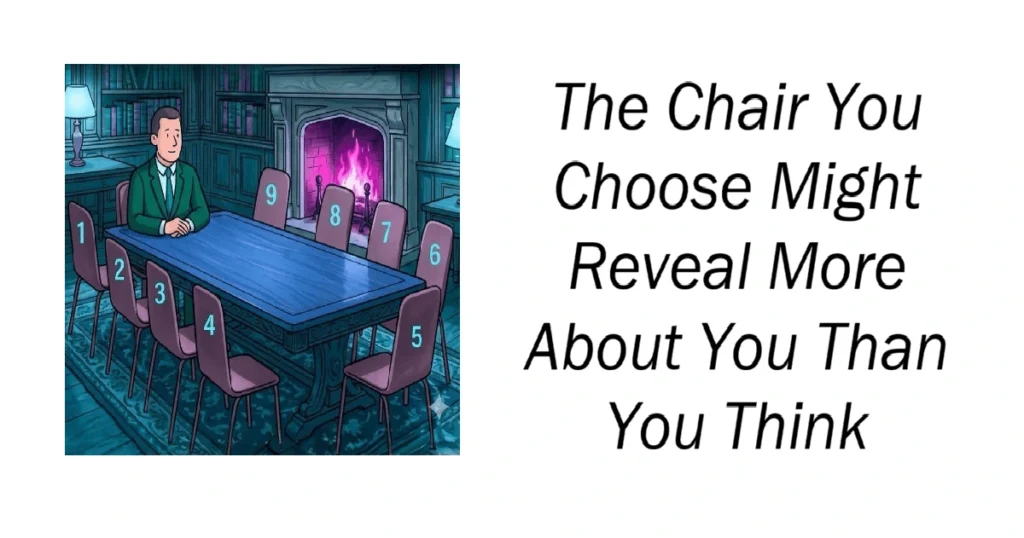
There’s a long table in the center. A fireplace glows softly at one end. Around the table are nine empty chairs, except for one already occupied by a silent stranger.
Now ask yourself one simple question:
Where would you sit?
It sounds almost too ordinary to mean anything. Yet many people are surprised by how instinctive that choice feels—and how much it may quietly reflect about their personality, comfort level, and social style.
This isn’t science or fortune-telling. It’s simply a way of noticing the subtle decisions we make every day without thinking.
And sometimes, those small decisions say more about us than we realize.
Why Small Choices Can Reveal Big Patterns
Most people don’t consciously analyze where they sit in a room. They just feel drawn to a certain place.
That instinct matters.
Whether we sit close to others, keep our distance, seek warmth, or position ourselves confidently says something about:
- How we connect with people
- What makes us feel safe
- How we handle attention, closeness, and independence
These choices are often honest because they happen before we have time to overthink them.
Chairs 1 and 2: The Natural Connector
If you instinctively sit near the other person, you’re likely someone who values connection and interaction.
You probably:
- Enjoy conversation easily
- Make others feel comfortable
- Notice when someone is left out
- Feel energized by social interaction
People often describe you as approachable, warm, or easy to talk to. You naturally create a sense of closeness, even in unfamiliar situations.
For you, relationships matter deeply—and you rarely take meaningful human connection for granted.
Chairs 3 and 4: The Thoughtful Observer
Choosing a seat that’s close—but not too close—suggests balance.
You value both connection and personal space. You tend to:
- Observe before speaking
- Listen carefully
- Prefer meaningful conversations over surface-level chatter
- Build deeper friendships rather than wide social circles
This personality type often carries a quiet confidence. You don’t feel the need to dominate attention, and people usually appreciate your calm, thoughtful presence.
Chairs 5 and 6: The Independent Spirit
If you choose a seat farther away, especially toward the middle or opposite end, independence likely matters to you.
You’re comfortable with solitude and don’t rely heavily on constant social interaction to feel fulfilled.
That doesn’t mean you dislike people. Instead, you:
- Value personal space
- Prefer quality over quantity in relationships
- Think deeply before speaking
- Feel comfortable being alone without feeling lonely
This type of independence often reflects emotional strength and self-awareness.
Chairs 7 and 8: The Comfort Seeker
The seats nearest the fireplace often attract people who value warmth, peace, and emotional safety.
If this was your choice, you may:
- Dislike tension or conflict
- Prioritize harmony in relationships
- Create calming environments for others
- Naturally support people emotionally
You likely feel things deeply and pay attention to the emotional atmosphere around you. Comfort, trust, and stability matter more to you than excitement or attention.
And often, you’re the person others turn to when they need to feel understood.
Chair 9: The Confident Leader
Sitting directly across from the other person is the boldest choice in the room.
It creates immediate eye contact and signals openness, confidence, and direct engagement.
People drawn to this seat are often:
- Assertive communicators
- Comfortable taking initiative
- Confident in social situations
- Natural leaders without necessarily trying to be
You probably don’t shy away from attention or difficult conversations. You value clarity, honesty, and presence.
When balanced with empathy, this personality style can be incredibly influential and respected.
Personality Isn’t Fixed
What makes this exercise interesting is that your answer could change depending on your mood, experiences, or stage of life.
A naturally social person may choose distance when emotionally drained. Someone independent may crave closeness during a difficult season.
That flexibility doesn’t make the insight meaningless—it makes it human.
As people grow older, they often become more aware of:
- What energizes them
- What drains them
- Which environments feel safe or stressful
- What kind of connection they truly value
Sometimes, a simple question helps bring that awareness into focus.
What Your Choice Might Teach You
Understanding your social instincts can help you:
- Build healthier relationships
- Respect your own emotional needs
- Communicate more honestly
- Create environments where you feel most comfortable
Whether you’re the connector, the observer, the independent thinker, the comfort seeker, or the confident leader, none of these traits are “better” than the others.
They’re simply different ways people move through the world.
Final Thoughts
Life is filled with tiny decisions that seem unimportant in the moment:
- Where you sit
- How close you stand
- Whether you speak first or wait
- Whether you lean in or pull back
Over time, those patterns quietly shape the story of who you are.
So think back to that room:
The table. The fireplace. The silent stranger already seated.
Where did you choose to sit?
And what might that instinct reveal about the person you’ve become?
You’ve just read The Chair You Choose Might Reveal More . Why not read Can Strong Smells Really Keep Snakes Away