
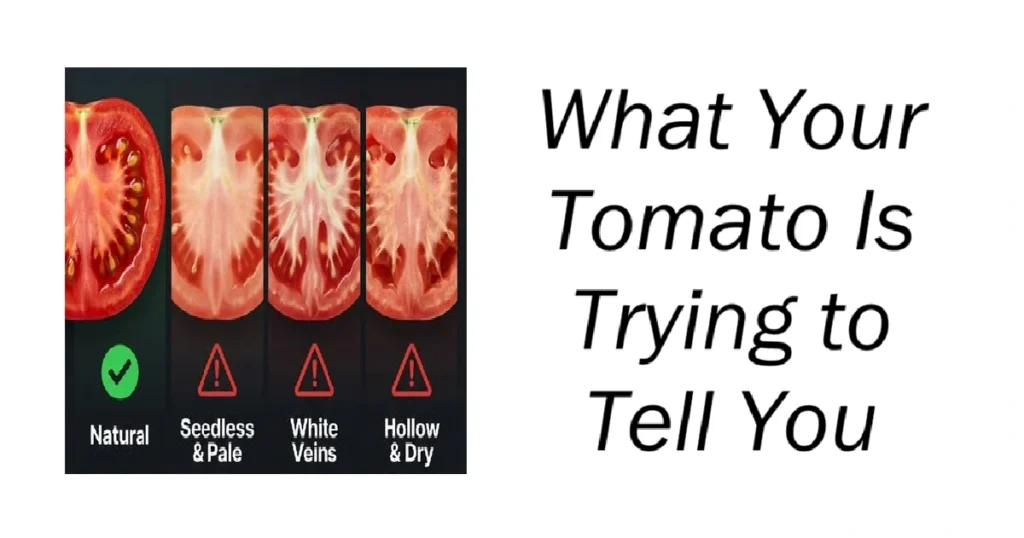
What Your Tomato Is Trying to Tell You
Not long ago, picking out a good tomato felt simple—grab the reddest one and move on. But today, that small decision has turned into something more thoughtful. With growing awareness around food quality, more people are paying attention not just to how produce looks, but how it was grown, handled, and ripened.
And few foods reveal their story quite like the humble tomato.
Slice It Open—That’s Where the Truth Is
At a glance, most tomatoes on a supermarket shelf seem nearly identical. Smooth, shiny, uniformly red. But the real difference shows up the moment you cut one open.
A naturally ripened tomato often has:
- Distinct seed pockets arranged in a loose, star-like pattern
- Juicy, slightly uneven flesh
- A rich, vibrant interior color
These features aren’t random—they’re signs of slow, natural development. Tomatoes that ripen on the vine have more time to build flavor, texture, and complexity.
By contrast, tomatoes grown for mass transport are often picked early and ripened later, which can affect both taste and internal structure.
Why “Perfect” Isn’t Always Better
It’s easy to assume that the most flawless tomato is the best one. But nature doesn’t usually produce perfection—and that’s actually a good thing.
Slight irregularities, subtle blemishes, or uneven shapes often point to more traditional growing methods. These tomatoes may not win a beauty contest, but they frequently deliver where it matters most: flavor.
In many cases, visual perfection is the result of breeding and handling for durability—not taste.
Color and Texture: A Better Way to Judge Ripeness
A high-quality tomato tends to have a deep, rich color—not pale or overly uniform. When you gently press it, it should feel:
- Firm enough to hold its shape
- Slightly soft, indicating ripeness
If it feels rock-hard, it was likely picked too early and ripened off the vine. That process can leave you with a tomato that looks ready—but tastes flat.
Don’t Forget to Smell It
Here’s a trick many people overlook: bring the tomato close to your nose, especially near the stem.
A good tomato often has a subtle, earthy, slightly sweet aroma. That scent comes from natural compounds that develop during proper ripening.
If there’s no smell at all, chances are the flavor will be just as muted.
Why This Matters More Than Ever
Modern agriculture has made tomatoes available year-round, shipped across countries and continents. While that’s convenient, it often comes at the cost of taste and texture.
Learning to recognize these small signs—inside and out—helps you choose produce that hasn’t lost its character along the way.
The Takeaway
The next time you pick up a tomato, don’t just judge it by its surface. Look closer. Slice it open. Notice the details.
Because sometimes, the foods that look the least “perfect” are the ones that stayed closest to how nature intended—and that’s usually where the best flavor lives.
You’ve just read What Your Tomato Is Trying to Tell You . Why not read The Morning Drink Everyone’s Talking About