
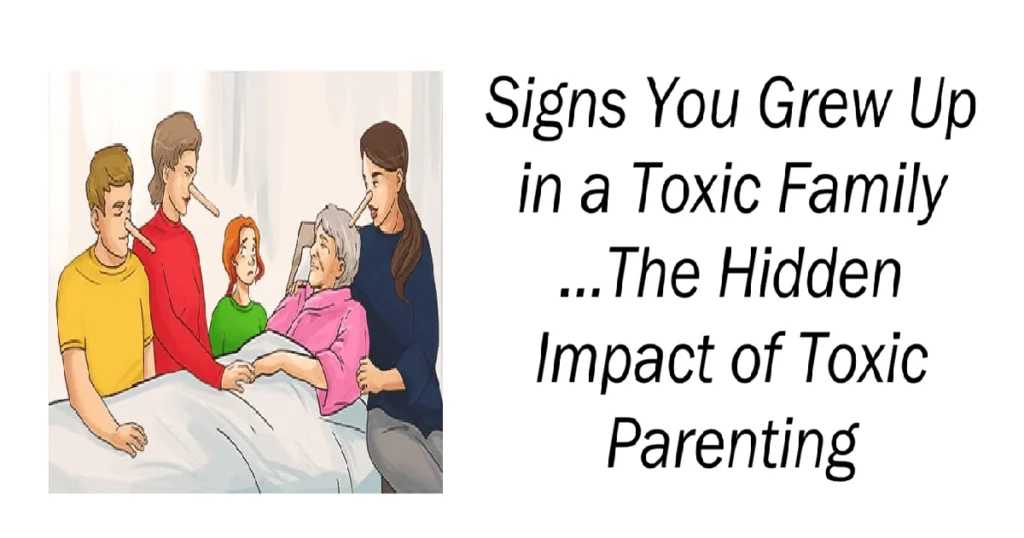
Signs You Grew Up in a Toxic Family …The Hidden Impact of Toxic Parenting
Emotional outbursts. Anxiety that seems to come out of nowhere. A constant inner critic that never quiets down.
For many people, these struggles don’t just appear randomly—they often trace back to early experiences at home.
When parents are emotionally unavailable, dismissive, or focused primarily on their own needs, children are left to navigate complex feelings on their own. Over time, this can shape how they see themselves, others, and the world around them.
Understanding these patterns isn’t about placing blame—it’s about gaining clarity. And sometimes, that clarity is the first step toward real healing.
How Early Experiences Shape Your Inner World
Childhood is where we learn what relationships feel like, how emotions are handled, and what we believe we’re worth.
In supportive environments, children develop confidence and emotional security. But in more toxic or unstable settings, they may carry invisible patterns into adulthood—patterns that quietly influence their thoughts, behaviors, and relationships.
Here are some common signs that early family dynamics may still be affecting you today.
1. You’re Constantly Guarded Against Manipulation
If manipulation was common growing up, you may now find it hard to fully trust others.
Even in safe relationships, there can be a lingering fear of being controlled or misled. As a result, you might:
- Overanalyze people’s intentions
- Keep emotional distance
- Avoid vulnerability altogether
2. Trust and Social Connections Feel Difficult
Growing up in a tense or unpredictable environment can leave you in a constant state of alertness.
As an adult, this can show up as:
- Difficulty relaxing around others
- Fear of being judged or blamed
- Expecting relationships to eventually go wrong
Building meaningful connections may feel risky instead of comforting.
3. Failure Feels Overwhelming
When mistakes were met with criticism instead of support, it’s easy to internalize the idea that you’re “not good enough.”
Even small setbacks can feel heavy, triggering:
- Intense self-doubt
- Fear of trying new things
- Emotional overwhelm
4. You Struggle With Your Sense of Identity
A healthy environment helps children understand who they are. Without that support, identity can feel unclear.
You might find yourself:
- Unsure of your goals or values
- Seeking validation from others
- Feeling disconnected from your true self
5. Your Inner Critic Is Loud
If you grew up feeling undervalued or criticized, that voice can become internal.
It may sound like:
- “I’m not good enough”
- “I always mess things up”
- “I don’t deserve better”
Over time, this self-criticism becomes exhausting—and hard to silence.
6. You Put Your Emotions Last
When emotions were ignored or dismissed in childhood, you may have learned to suppress them.
As an adult, this can look like:
- Prioritizing others’ needs over your own
- Struggling to identify how you feel
- Feeling disconnected from your emotions
7. You Still Feel Like a Helpless Child
Some parents maintain control well into their children’s adulthood, discouraging independence.
This can create:
- Fear of making decisions
- Doubt in your own abilities
- A lingering sense of helplessness
Breaking free from this mindset can take time and conscious effort.
8. Anxiety Feels Like a Constant Companion
Growing up in an environment that didn’t feel safe—emotionally or physically—can lead to long-term anxiety.
This may show up as:
- Restlessness or irritability
- Difficulty concentrating
- Persistent worry, even without clear reasons
Moving Toward Understanding and Healing
Recognizing these patterns can feel uncomfortable—but it’s also empowering.
It helps answer an important question:
“Why do I feel this way?”
And once you understand the “why,” you can begin to:
- Build healthier boundaries
- Develop self-compassion
- Create more supportive relationships
Final Thoughts
Many people carry these experiences quietly, without ever connecting them to their roots.
If any of these patterns feel familiar, you’re not alone—and more importantly, they’re not permanent.
Awareness is the first step. From there, change becomes possible—one small, intentional step at a time.
You’ve just read Signs You Grew Up in a Toxic Family. Why not read Cabbage A Kitchen Staple