
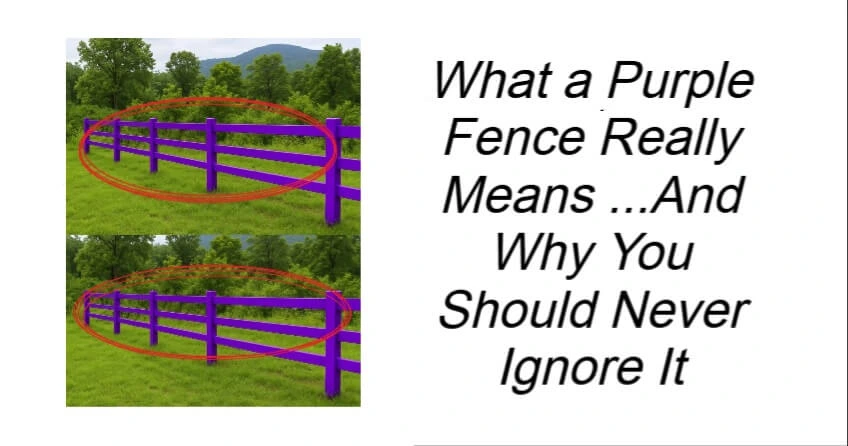
What a Purple Fence Really Means …And Why You Should Never Ignore It
You’re walking down a quiet country road or hiking a peaceful trail when something unusual catches your eye—a fencepost marked with a bold streak of purple.
At first, it might seem random. Maybe leftover paint. Maybe someone’s creative touch.
But that simple mark carries a message you should never ignore.
The Hidden Meaning Behind the Purple Paint
In many parts of the United States, a purple-painted fence, post, or tree isn’t decoration—it’s a legal warning.
It means one thing, clearly and directly:
No trespassing.
This system, often referred to as the “Purple Paint Law,” was created as a practical solution for landowners. Traditional signs can fade, fall, or be removed. Paint, on the other hand, is durable, visible, and hard to ignore.
In states that recognize it, crossing a boundary marked with purple paint can carry the same legal consequences as ignoring a posted sign.
Why Purple?
The choice of color isn’t random. Purple stands out sharply against natural landscapes like trees, grass, and wooden fences.
It’s also:
- Rare in nature, so it doesn’t blend in
- Distinct from safety colors like red or orange
- Highly visible from a distance
It sends a message that is clear without being aggressive—a quiet but firm boundary.
The Rules Behind the Markings
For the paint to carry legal weight, it must follow specific guidelines (which can vary slightly by state). Most commonly:
- Vertical lines only – not random marks or splashes
- At least 1 inch wide and 8 inches long
- Placed 3–5 feet above the ground (easy to see at eye level)
- Repeated every 100 feet along the boundary
These details ensure the markings are unmistakable and not confused with accidental stains or damage.
Where Is This Law Used?
More than a dozen U.S. states recognize purple paint as a legal boundary marker. These include:
- Texas
- North Carolina
- Illinois
- Kansas
- Missouri
- Indiana
- Florida
- Pennsylvania
- Arkansas
Each state has its own regulations, but the meaning remains the same: respect the boundary.
If you’re unsure about local laws, it’s always best to check before relying on or interpreting these markings.
Why This System Works So Well
At first glance, painting fences purple might seem unusual—but it’s actually a smart and effective solution.
- Long-lasting: Paint doesn’t blow away or rust like signs
- Cost-effective: A single can can mark large areas
- Low maintenance: Requires less frequent replacement
- Cleaner look: Avoids cluttering natural landscapes with signs
For hikers, hunters, and travelers, it also provides a clear, respectful warning without disrupting the scenery.
What You Should Do If You See a Purple Fence
If you come across purple markings outdoors, take them seriously:
- Do not cross the boundary
- Keep pets and equipment within public or permitted areas
- Check maps or local guidance if you’re unsure about access
It’s not just about avoiding fines—it’s about respecting someone else’s land and livelihood.
A Quiet Symbol of Respect
Interestingly, the color purple has long been associated with dignity, protection, and respect. In this context, it fits perfectly.
Rather than shouting a warning, it offers a calm, clear message:
This land matters. Please honor it.
For Property Owners: A Simple Solution
If you own land, this method can be a practical way to mark boundaries. Just be sure to:
- Use weather-resistant outdoor paint
- Follow local legal guidelines
- Keep markings consistent and visible
- Inform neighbors when possible
It’s a simple step that can prevent misunderstandings and protect your property.
The Next Time You See Purple…
That small streak of paint isn’t random—it’s communication.
It’s a quiet reminder that every piece of land has a story, an owner, and a boundary worth respecting.
So next time you spot purple on a fence or tree, pause for a moment.
It’s not just a mark.
It’s a message.
You’ve just read What a Purple Fence Really Means. Why not read Simple Clover Puzzle