
Why Some Gardeners Are Placing Plastic Forks in Their Vegetable Gardens
Gardening tips often involve specialized tools or expensive products. But sometimes, the most helpful tricks come from the simplest household items. One surprising example is something many people already have in their kitchen drawer: plastic forks.
At first glance, the idea of sticking plastic forks into garden soil might sound strange—or even funny. Yet many gardeners, from beginners to experienced growers, have discovered that this simple method can actually help protect their plants.
What might seem like leftover picnic cutlery can become a surprisingly useful tool for keeping a vegetable garden safe.
A Simple Way to Protect Plants Naturally
One of the biggest challenges gardeners face is protecting young plants from pests and small animals. Vegetables and herbs often attract creatures searching for food or soft soil to dig in.
While garden centers sell many pest-control products, some gardeners prefer natural solutions that avoid strong chemicals. These methods are often better for the environment and help maintain healthier soil.
For people who are busy with work, family, and daily responsibilities, constantly monitoring a garden isn’t always possible. That’s why simple, low-maintenance tricks can be so valuable.
How the Plastic Fork Trick Works
The idea behind the plastic fork method is surprisingly straightforward.
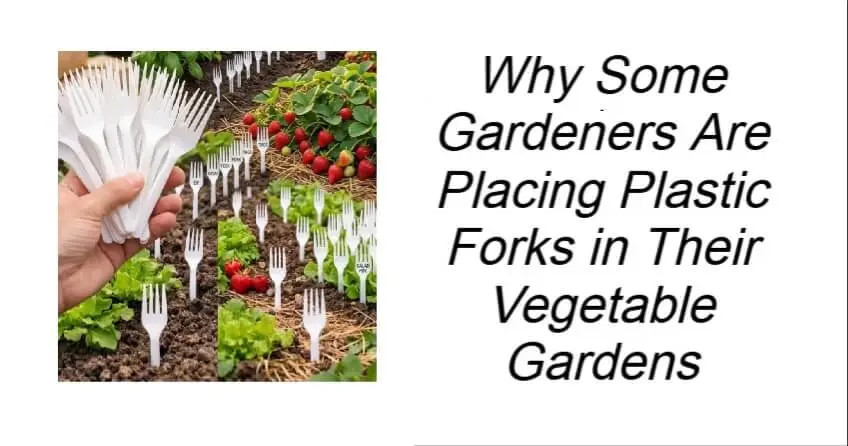
Gardeners place plastic forks in the soil with the prongs facing upward around vulnerable plants. These forks create a small physical barrier that discourages animals from stepping into the area.
Many animals dislike walking on sharp or uncomfortable surfaces. When they encounter the prongs of the forks, they are more likely to avoid the area entirely.
This simple barrier helps protect delicate plants such as:
- Lettuce
- Strawberries
- Herbs
- Young seedlings
Although the forks won’t stop every garden visitor, they can significantly reduce digging and damage in small garden spaces.
Perfect for Small Gardens and Balconies
This trick is especially helpful for gardeners with limited space.
Raised beds, vegetable patches, and balcony planters often leave plants more exposed to animals. A ring of forks around each plant can help create a protective zone without interfering with plant growth.
Because the forks sit above the soil surface, they act as a deterrent while still allowing water, sunlight, and nutrients to reach the plant
A Low-Cost and Eco-Friendly Solution
Another benefit of this method is its affordability.
Many households already have plastic cutlery left over from picnics, parties, or takeout meals. Instead of throwing them away, gardeners can give them a second life in the garden.
Setting up the barrier is quick and easy:
- Clear the soil slightly around the plant.
- Insert the forks evenly into the ground.
- Leave the prongs visible above the soil.
Within minutes, you can create a protective barrier around your plants.
Small Tricks Can Make a Big Difference
Of course, basic plant care is still essential. Regular watering, mulching, and monitoring plant health remain important parts of gardening.
However, clever tricks like the plastic fork method can provide an extra layer of protection with very little effort.
Sometimes the most effective gardening solutions don’t come from expensive tools—they come from seeing everyday objects in creative new ways.
You’ve just read Gardeners Are Placing Plastic Forks in Their Vegetable Gardens . Why not read One Strange Moment at Home