
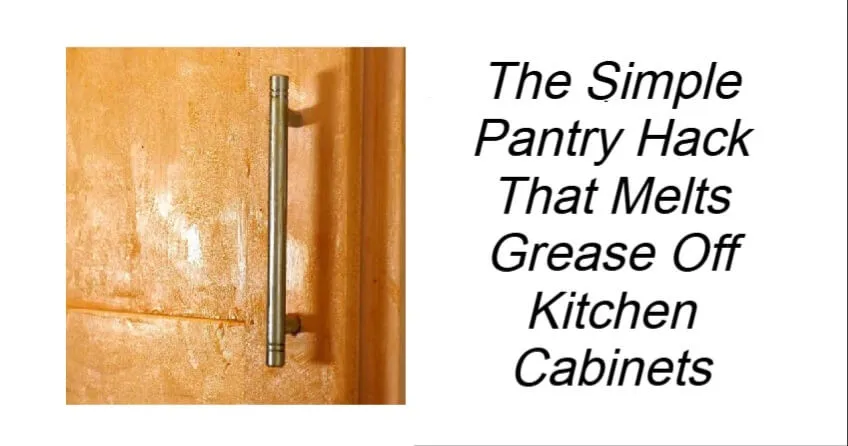
The Simple Pantry Hack That Melts Grease Off Kitchen Cabinets
If you love to cook, you know the struggle all too well. No matter how often you wipe down your kitchen, the cabinets near your stove eventually develop a stubborn, sticky film of grease. It’s an unholy mix of airborne oil, steam, and dust that quietly builds up over time. The result? Cabinets that look dull, grimy, and way harder to clean than they should be.
Even worse, traditional solutions usually involve harsh chemicals and aggressive scrubbing—both of which can damage cabinet finishes and leave you exhausted (and coughing from the fumes).
Luckily, I learned a much better way.
My aunt passed down a simple, gentle, and surprisingly effective cleaning hack using nothing but pantry staples. The payoff? Sparkling cabinets, zero toxic cleaners, and minimal effort.
Why Kitchen Cabinets Get So Greasy
Every time you cook, microscopic droplets of oil rise into the air. These particles naturally settle on nearby surfaces—especially cabinet doors above and around the stove. Over time, layers of oil attract dust and grime, creating a sticky buildup that traps odors and dulls finishes.
Many people reach for strong degreasers or abrasive pads to tackle the mess, but those methods can strip finishes, scratch surfaces, and irritate your lungs. That’s why a gentler approach isn’t just safer—it’s smarter.
The Unexpected Pantry Solution: Baking Soda + Vegetable Oil
Yes, oil to clean grease—but stay with me.
This unlikely pairing works beautifully thanks to a little chemistry and a lot of common sense:
- Baking soda provides mild abrasive power, breaking down grease without scratching surfaces. It also neutralizes lingering cooking odors.
- Vegetable oil helps dissolve hardened grease. The “like dissolves like” principle applies here—oil loosens oil, making stubborn buildup easy to wipe away.
When combined, they form a soft paste that lifts grime, restores shine, and leaves minimal residue behind.
How to Clean Greasy Cabinets (Step by Step)
You’ll need:
- 1 tablespoon baking soda
- 1 tablespoon vegetable oil (any kind works)
- A soft cloth or sponge
- Warm water
Instructions:
- Mix equal parts baking soda and oil in a small bowl until smooth.
- Dip a soft cloth or sponge into the paste.
- Gently apply it to greasy cabinet surfaces—no aggressive scrubbing needed.
- Let it sit for 5–10 minutes to soften the buildup.
- Wipe clean with a cloth dampened in warm water.
- Rinse again if needed, then buff dry to restore shine.
Most cabinets will look dramatically better after one pass. For tougher spots, repeat the process. Always finish with a warm-water wipe to prevent streaks.
How to Keep Cabinets Grease-Free Longer
- Wipe daily: A quick pass with a damp cloth after cooking prevents buildup.
- Use grease filters: They capture airborne oil before it settles.
- Skip harsh cleaners: Gentle DIY methods protect cabinet finishes.
- Match products to materials: Wood may benefit from a light polish, while laminate cabinets do best with mild soap or plain water.
Final Thoughts
My aunt’s baking soda and vegetable oil trick is one of those rare cleaning hacks that actually lives up to the hype. It’s affordable, effective, and uses ingredients you already have on hand—no harsh fumes, no damaged finishes, and no sore arms.
The next time your kitchen cabinets start looking grimy, skip the chemical cleaners. Reach for this simple paste instead. In just minutes, you’ll have grease-free, gleaming cabinets—and a kitchen that looks as good as it smells.
You’ve just read, The Simple Pantry Hack That Melts Grease Off Kitchen Cabinets. Why not read Manager Had To Hire A New Employee.