
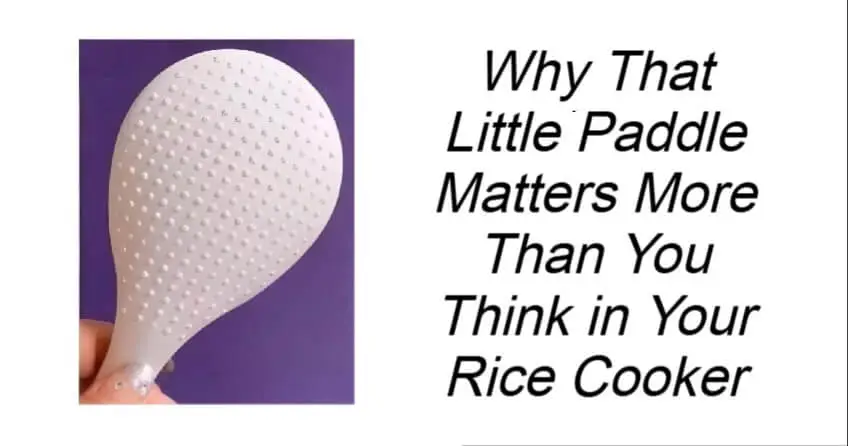
Why That Little Paddle Matters More Than You Think In Your Rice Cooker
If you’ve ever bought a rice cooker, you may have noticed a curious tool inside — a rice paddle. At first glance, it looks like a wide, flat spatula with a round head and short handle, often made of plastic or wood. In Japan, this handy utensil is known as a shamoji, and it’s an essential part of everyday cooking.
While it might be tempting to toss it in a drawer, this simple tool actually plays a big role in protecting your rice cooker and improving your rice’s texture.
The Real Purpose of the Rice Paddle
Rice cookers are typically lined with a nonstick coating that can be easily damaged by metal utensils. Scratches or peeling can affect how evenly your rice cooks — and shorten the life of your cooker.
That’s where the rice paddle comes in. It’s specifically designed to be gentle on nonstick surfaces, so you can stir, scoop, and serve rice without causing damage.
How to Use It the Right Way
Once your rice finishes cooking, resist the urge to dig in immediately. Instead, use the rice paddle to gently stir and fluff the rice. This helps release excess moisture evenly, improving texture and preventing clumping.
If you’re making sushi rice, the paddle is also perfect for mixing in vinegar while keeping the grains fluffy and intact.
Why Chefs Love Rice Cookers
Rice cookers are a kitchen essential for anyone who cooks rice often — or struggles to get it right on the stovetop. These appliances take the guesswork out of cooking by automatically adjusting the heat once the rice is done.
Chef Dale Talde, owner of Goosefeather, puts it best:
“It’s a must-have appliance because even if you happen to put in too much water or not enough, it adjusts to help make perfect rice.”
Modern rice cookers go beyond the basics — many can prepare curries, stews, and even porridge, with settings for quick-cook or delayed start options for flexible meal prep.
The Importance of Rinsing and Soaking Rice
Before cooking, it’s crucial to rinse rice until the water runs clear. This removes dust, excess starch, and trace amounts of arsenic, resulting in cleaner, fluffier grains.
Market analyst Min Kim Bryant explains it simply:
“The same reason I wash my produce is why I wash my rice.”
For thicker grains like brown, sushi, or wild rice, soaking them for about 30 minutes helps soften the grains and improve texture.
Cooking Rice on the Stovetop
No rice cooker? No problem. Perfect stovetop rice is all about using the right pot and water ratio. Chef JJ Johnson, owner of Fieldtrip, advises using a large pot for even cooking — small pots often trap steam and cook rice unevenly.
Here are the recommended water ratios for 1 cup of rice:
- Long-grain white rice: 1½ cups water
- Sushi rice: 1¼ cups water
- Short-grain brown rice: 2¼ cups water
Bring the mixture to a boil, then reduce heat to low, cover, and simmer until the water is absorbed — about 20 minutes for white rice and 45 minutes for brown rice. Let it rest for 10 minutes before fluffing with your rice paddle.
For extra flavor, try cooking rice with broth, coconut milk, or aromatic spices like saffron or turmeric. Avoid stirring while it cooks, and add a touch of oil to prevent sticking.
Bonus Tips for Perfect Rice
Photo by Daniel Téllez Girón on Unsplash
- Toast it: After cooking, sauté rice lightly in oil for a nutty aroma and crisp texture.
- Batch cook: Make extra rice, portion it, and freeze it for easy meal prep. Reheat with a splash of water or oil.
- Reuse creatively: Turn leftovers into fried rice, soups, stews, or rice pudding.
The Bottom Line
That little rice paddle that comes with your cooker isn’t just an accessory — it’s a key part of the process. Designed to protect your appliance and perfect your rice, it helps you get the most out of every meal.
With the right tools, rinsing, and a bit of know-how, you’ll enjoy fluffy, flavorful rice every single time — no matter how you cook it.
You’ve just read, Why That Little Paddle Matters More Than You Think . Why not read Manager Had To Hire A New Employee.