
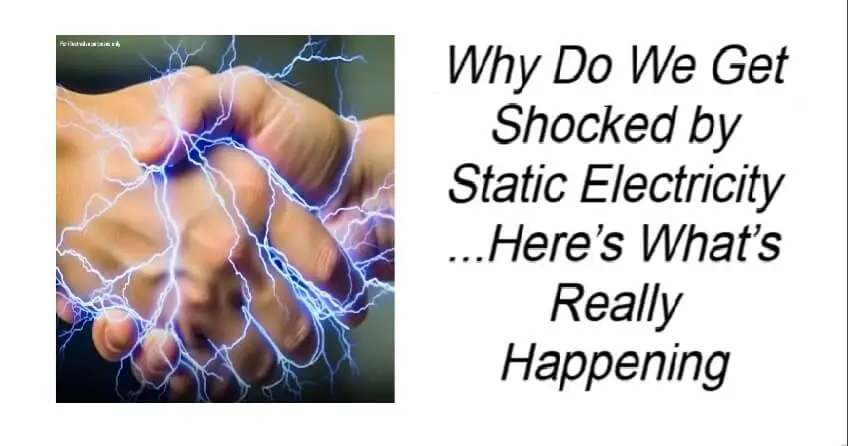
Why Do We Get Shocked by Static Electricity …Here’s What’s Really Happening
Have you ever reached out to shake someone’s hand—or grabbed a doorknob—and felt a tiny, unexpected zap? It’s quick, surprising, and sometimes even a little uncomfortable. If you’ve ever wondered what’s going on in those moments, let’s break it down together.
1. That Little Jolt Has a Name
That spark you feel? It’s called static electricity—and while it might seem random or mysterious, there’s actually a fascinating (and totally logical) science behind it. It’s not just your body playing tricks on you.
2. Everyday Sparks: When Static Strikes
These mini shocks happen more often than you might think. Common culprits include:
- Shaking hands
- Taking off a sweater
- Touching a metal railing or doorknob
Each of these moments involves your body trying to balance out electrical charges. The energy you’ve unknowingly built up gets discharged all at once—and that’s the shock you feel.
3. So, What Is Static Electricity?
Here’s the science-y part (don’t worry, we’ll keep it simple). Static electricity happens when two surfaces with different electrical charges come into contact and then separate. If your body has an excess of electrons and you touch someone or something that’s neutral (or less charged), those electrons suddenly leap to even things out. That quick movement? That’s your spark.
4. Why Some Days Feel Extra Zappy
Not all static shocks are created equal. Several factors can increase how much static your body builds up:
- Friction: Think clothes rubbing against your skin or shoes on carpet.
- Your body: Yes, even sweat matters. Dry skin holds charge differently than moist skin.
- Material matters: Synthetic fabrics and plastics trap charge more easily than natural fibers.
The Spanish National Institute of Occupational Safety and Health points out that movement, sweat levels, and the types of materials we interact with all play a role.
5. Environment: The Hidden Factor
Ever noticed how static seems worse in the winter? That’s because humidity (or the lack of it) plays a major role. Dry air—especially in heated indoor spaces—makes it easier for static charge to build up. In contrast, humid environments help disperse that energy. Even your flooring matters: carpets love static; smooth tiles, not so much.
6. Is It Dangerous?
For most of us, static shocks are completely harmless—more of a surprise than a real concern. That said, people with pacemakers or implanted medical devices should be a little more cautious. Even small discharges could, in rare cases, interfere with device function.
7. Believe It or Not—We Use Static Electricity
Static electricity isn’t just an everyday annoyance—it actually powers some cool technology:
- In textile factories, it helps align or bond fibers.
- In laser printers, static charges help transfer ink to paper with precision.
So next time you feel a shock, think: laser printers and fabric tech owe their magic to the same principle.
8. Final Thoughts: A Zap of Science
That little static shock isn’t a malfunction of the universe—it’s just electricity doing its thing. It’s influenced by what you wear, where you are, and how dry the air is. And while it may make your hair stand on end (literally), it’s nothing to fear.
So the next time someone reaches out and you both flinch from a spark, you can smile and say, “That’s just physics.”
You’ve just read, Why Do We Get Shocked by Static Electricity. Why not read Manager Had To Hire A New Employee.