
Unexpected Fire Hazard in Fluorescent Light Bulb
Jason Whitaker, a Kentucky resident, recently took to Facebook to share a surprising fire hazard he encountered—one that many homeowners might never think to check.
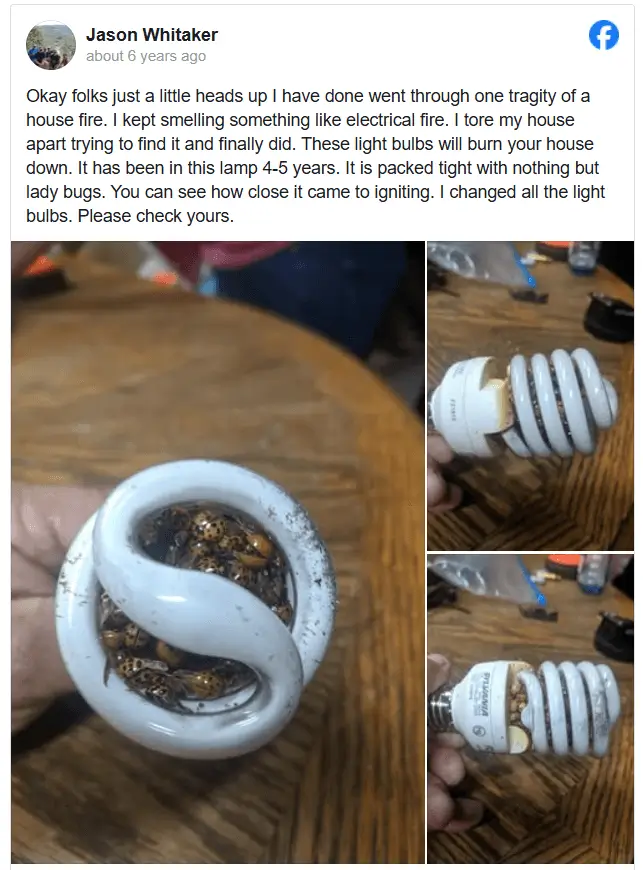
Jason described noticing the distinct smell of an electrical fire and began searching his home to find the source. After a thorough search, he traced the smell back to an unexpected culprit: a fluorescent spiral light bulb.
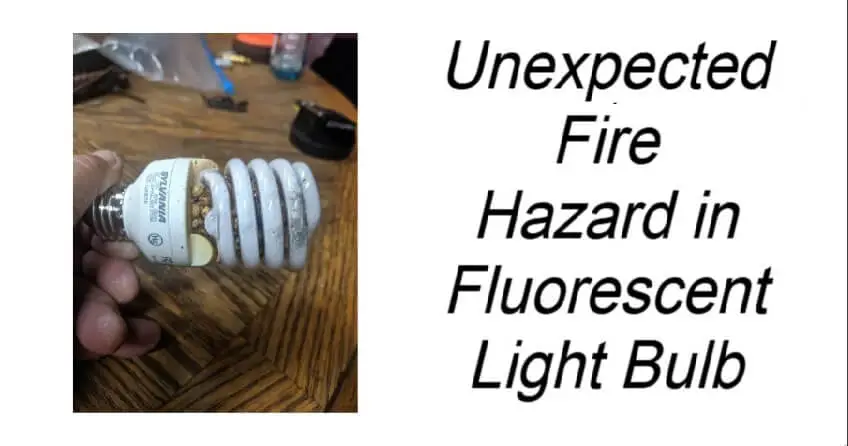
Inside the coils of the bulb, Jason discovered a shocking sight: a large number of ladybugs had crawled into the tight spiral, drawn by the warmth and light. Over time, the insects accumulated to the point where they were dangerously close to causing ignition due to the bulb’s heat.
“Inside the spiral coils of the light bulb was nothing but ladybugs,” Jason wrote. His photos revealed the severity of the situation and the real potential for a fire to start.
This incident highlights a lesser-known risk associated with compact fluorescent light (CFL) bulbs. The spiral design creates small gaps where insects—particularly those seeking warmth, like ladybugs—can become trapped. As they build up, they can overheat or even smolder against the hot glass, increasing the risk of fire.
Jason’s takeaway was simple but powerful:
“I found it important to share this post with you all, as this is a potential fire hazard I would have never known about.”
🔍 What You Can Do:
- Regularly inspect fluorescent spiral bulbs, especially in lamps or fixtures used infrequently.
- Replace or clean bulbs if you notice insects collecting inside.
- Consider switching to LED bulbs, which don’t produce as much heat and have fewer crevices for insects to enter.
While rare, Jason’s experience is a helpful reminder that even small, everyday items can pose hidden dangers. A quick check now and then could prevent a serious problem later.
You’ve just read,Unexpected Fire Hazard in Fluorescent Light Bulb. Why not read Manager Had To Hire A New Employee.