
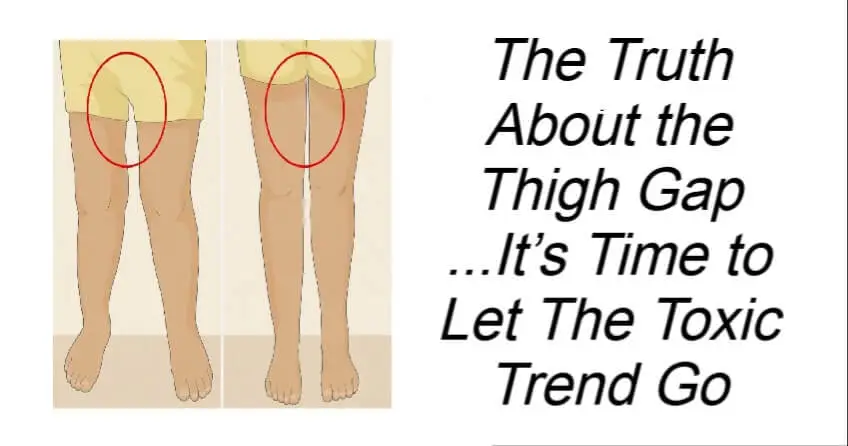
The Truth About the Thigh Gap …It’s Time to Let The Toxic Trend Go
Some trends—despite changing times and growing awareness—refuse to disappear. The “thigh gap” is one of them. This coveted space between the inner thighs when standing has become a persistent beauty ideal, especially on social media. But why does this anatomical feature continue to fascinate, even though it’s unattainable for the vast majority of us?
Here’s the truth: it has nothing to do with discipline, fitness, or willpower.
The Thigh Gap: A Persistent Misconception
Since the rise of Instagram, TikTok, and other image-focused platforms, aesthetic ideals have been amplified to extremes. The thigh gap, once a niche concept, has evolved into a symbol of thinness, with countless posts, “challenges,” and “tips” promising to help people achieve it.
But let’s be clear: the ability to have a thigh gap is largely determined by your bone structure, not your diet or workout routine. The angle of your femur, the width of your hips, and the natural alignment of your legs—all genetically determined—play the central role. Not squats. Not smoothies.
What Science (and Your Skeleton) Say
Even people who are extremely lean may never have a visible thigh gap—and that’s entirely normal.
British medical expert Dr. Ross Perry emphasizes that the thigh gap is simply the result of specific skeletal traits. It’s not a sign of health, nor should it be a fitness goal. No amount of dieting, cardio, or targeted exercises can change how your femurs are angled or how close your hip bones are.
In fact, many thigh gaps you see in magazines or online may not even be real—digital retouching and posing tricks are widespread in the beauty and fashion industries.
When Social Pressure Turns Dangerous
The most troubling part? Young women and girls are being pushed to extremes to achieve this illusion. From obsessive dieting to overexercising, the pursuit of a thigh gap can lead to real physical and mental harm—including eating disorders, anxiety, and lasting damage to self-esteem.
It’s a harsh example of how unrealistic standards can become deeply ingrained—even when they’re based on fiction.
The Reality: There Is No “Ideal” Body
The truth is, there’s no single blueprint for how a body should look. Every body is different—and that’s the beauty of human variation. Thankfully, many voices are now speaking out against these harmful ideals, advocating for self-acceptance and body diversity.
So What Can You Do Instead?
If you find yourself affected by this trend—or any other toxic beauty standard—here’s a simple mantra: refocus.
Shift your attention to goals that actually serve your health and happiness. Think:
- Getting stronger
- Feeling more energized
- Becoming more flexible
- Building a healthier relationship with your body
There’s no safe or scientifically valid way to “get” a thigh gap—and inner thigh exercises won’t change your bone structure. What’s more valuable than fitting into an unrealistic mold is learning to appreciate and care for the body you already have.
Final Thoughts
Your body doesn’t need to look a certain way to be worthy, beautiful, or strong. The thigh gap is a trend rooted in misinformation and unattainable ideals—not reality. Instead of chasing an illusion, focus on building confidence, strength, and a mindset that embraces your natural shape.
Because your body isn’t the problem. The standard is.
You’ve just read, The Truth About the Thigh Gap. Why not read Manager Had To Hire A New Employee.