
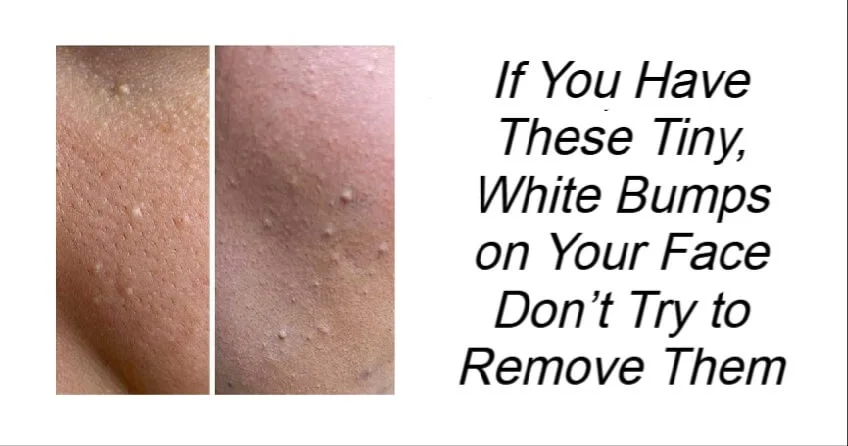
If You Have These Tiny, White Bumps on Your Face Don’t Try to Remove Them
Have you noticed small white bumps on your skin, especially around your nose or cheeks? These tiny blemishes can be frustrating and even worrisome, especially when they don’t respond to typical acne treatments. While it’s tempting to dismiss them as pimples or blackheads, understanding what they really are is key to treating them effectively—and preventing scarring or further irritation.
What Are These Bumps?
These bumps are most commonly a type of acne-like condition called milia. Milia are tiny, keratin-filled cysts that form just beneath the surface of the skin. They appear as small, firm, white or yellowish lumps and typically don’t have an opening, which makes them difficult to pop or treat with standard over-the-counter acne products.
Unlike pimples, milia are not caused by bacteria or oil but by trapped keratin, a protein naturally found in the skin.
Should You Be Worried?
1. They’re Harmless (But Stubborn)
Milia are benign and don’t pose any health risks. They’re more of a cosmetic concern than a medical one. However, they can be stubborn and may linger for weeks, months, or even longer without treatment.
2. Persistence Can Be Frustrating
While harmless, milia can be resistant to common acne remedies. Without the right care, they may persist or increase in number, especially in areas with heavy skincare product buildup.
3. Rare Signs of Underlying Issues
In rare cases, a sudden onset of milia in large numbers may point to an underlying skin condition or result from certain medications or trauma to the skin. If you’re seeing new bumps suddenly or in unusual locations, it’s a good idea to consult a dermatologist.
How to Get Rid of Milia
1. Professional Extraction
One of the safest and most effective ways to remove milia is through dermatologist extraction. Skin professionals use sterile tools to carefully remove the cysts without damaging the surrounding skin or causing infection.
2. Prescription Retinoids
Topical retinoids (vitamin A derivatives) promote cell turnover, helping to bring trapped keratin to the surface. These are typically available by prescription and are especially effective for those with persistent or recurring milia.
3. Over-the-Counter Exfoliants
Products containing AHAs (alpha hydroxy acids) or BHAs (beta hydroxy acids)—like glycolic acid or salicylic acid—can gently exfoliate the skin, helping prevent and treat milia by keeping pores clear and encouraging skin renewal.
4. Gentle At-Home Care
Some home remedies may offer mild improvement, such as:
- Using warm compresses to open pores
- Washing with gentle, non-stripping cleansers
- Avoiding harsh scrubs that could irritate the skin
However, avoid squeezing or picking at the bumps—this can lead to scarring or infection.
5. Avoid Heavy Skincare Products
Thick creams, oily lotions, or occlusive makeup can block pores and contribute to milia formation. Opt for non-comedogenic products to reduce the risk of clogging your skin.
Although those small white bumps might seem frustrating, milia are usually harmless and treatable. With the right care—whether it’s gentle exfoliation, prescription creams, or professional extraction—you can reduce or eliminate them and restore smoother, clearer skin.
If you’re unsure whether you’re dealing with milia or something else, or if the bumps don’t go away, it’s always wise to consult a dermatologist for accurate diagnosis and guidance.
You’ve just read, White Bumps on Your Face Don’t Try to Remove Them. Why not read Manager Had To Hire A New Employee.