
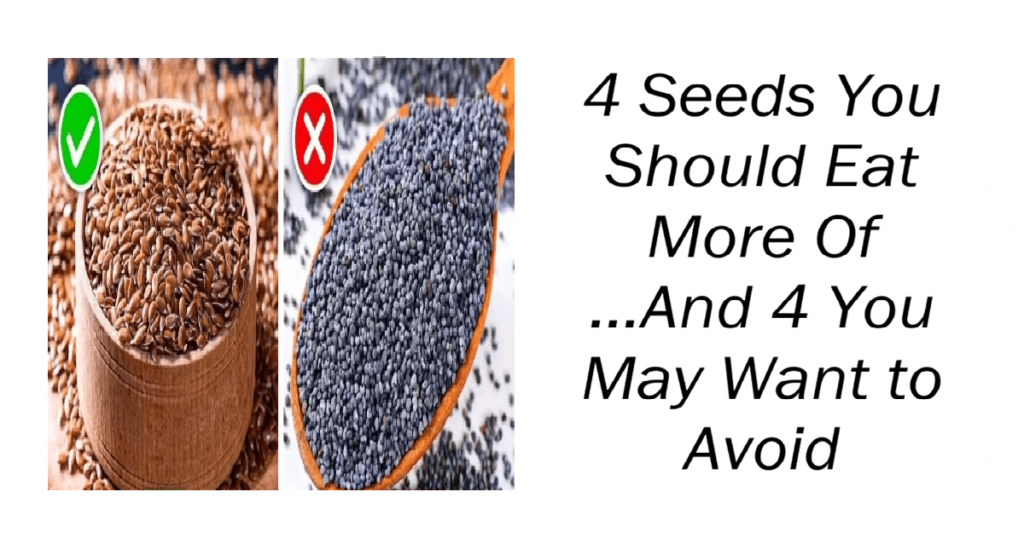
4 Seeds You Should Eat More Of …And 4 You May Want to Avoid
Seeds are often called superfoods—and for good reason. These tiny nutritional powerhouses are packed with vitamins, minerals, healthy fats, and fiber that can do wonders for your health.
But here’s the catch: not all seeds are equally beneficial. While some can boost your well-being, others may contain natural toxins or cause unwanted side effects if consumed incorrectly.
Let’s break down the seeds you should definitely include in your diet—and the ones to approach with caution.
4 Seeds You Should Include in Your Diet
1. Chia Seeds
Why they’re great:
Chia seeds are loaded with omega-3 fatty acids, fiber, and plant-based protein. They support heart health, aid digestion, and help stabilize blood sugar levels.
How to enjoy them:
- Add to smoothies or yogurt
- Stir into oatmeal
- Make chia pudding for a quick, healthy snack
2. Flaxseeds
Why they’re great:
Flaxseeds are rich in omega-3s, antioxidants (lignans), and fiber. They’re known for supporting heart health, improving digestion, and even helping with hormone balance.
How to enjoy them:
- Use ground flaxseeds for better absorption
- Sprinkle on salads or cereal
- Mix into baked goods or smoothies
3. Pumpkin Seeds
Why they’re great:
These seeds are packed with magnesium, zinc, and healthy fats. They support strong bones, boost immunity, and may even improve sleep quality.
How to enjoy them:
- Snack on them roasted
- Sprinkle over salads or soups
- Add to granola mixes
4. Sesame Seeds
Why they’re great:
Sesame seeds are rich in calcium, magnesium, and antioxidants. They’re excellent for bone health and may help reduce inflammation.
How to enjoy them:
- Add to stir-fries
- Sprinkle on bread or salads
- Use as tahini in dressings and dips
4 Seeds You May Want to Avoid (or Use Carefully)
1. Apple Seeds
They contain compounds that can release cyanide when digested in large amounts. Accidentally eating a few is harmless—but avoid consuming them regularly.
2. Cherry & Apricot Pits
Like apple seeds, these contain cyanogenic compounds and should never be eaten.
3. Raw Kidney Bean Seeds
Technically seeds, raw or undercooked kidney beans contain toxins that can cause severe digestive issues. Always cook them properly before eating.
4. Nutmeg (in Large Quantities)
While safe in small amounts, nutmeg seeds can be toxic if consumed excessively, leading to unpleasant side effects.
Final Thoughts
Adding nutrient-rich seeds to your diet is one of the simplest ways to boost your overall health. From better digestion to improved heart health, seeds like chia, flax, pumpkin, and sesame offer powerful benefits in small servings.
However, balance is key. Even healthy seeds should be consumed in moderation, and proper preparation—like soaking chia seeds or grinding flaxseeds—can make a big difference in how your body absorbs their nutrients.
At the same time, it’s important to stay informed about seeds that may pose risks if eaten incorrectly.
The Bottom Line
Healthy eating isn’t about perfection—it’s about making smarter choices every day. By including the right seeds and avoiding the risky ones, you can take a simple but powerful step toward better nutrition.
So go ahead—sprinkle, blend, and snack your way to a healthier you
You’ve just read 4 Seeds You Should Eat More Of . Why not read Don’t Throw Away Eggshells.